Rebuilding Zyvlon into a multi-template commerce platform merchants can actually run.
The revamp turns Zyvlon from one storefront into a platform: every merchant picks a template, sells through a checkout the business controls, and runs products, orders, payments, marketing and support from one dashboard, with the original Zyvlon UI carried over so existing merchants are not re-trained.
A ground-up rebuild of Zyvlon's storefront and merchant dashboard: three switchable storefront templates, a real cart-to-checkout flow with cash on delivery and bank-transfer slips, and all 27 dashboard sections running on a multi-tenant PostgreSQL model.
Built by the CrysoLabs team

Category
Commerce Platform
Collaboration
CrysoLabs Team
Primary stack
Next.js 16, React 19, TypeScript
Zyvlon started as a single premium storefront. As merchants joined, each needed a different way to sell: a full cart and checkout for electronics, a buy-through-a-link showcase for handmade ceramics, a classic catalog for general retail. Forking the codebase per shop was not an option.
Best fit for businesses launching several branded stores, agencies selling storefronts to their own clients, and retailers who need cash on delivery and bank transfers handled properly rather than bolted on.
What this proves
The build demonstrates the ecommerce capabilities a serious brand needs before it can sell confidently online.
Commerce capabilities
Three templates, one runtime
Premium Commerce is the full catalog store, ComputorShop adds a 3D hero spotlight with cart and checkout, and POT.lk is an editorial showcase that sells through buy links or WhatsApp. Each store loads only its own template code.
Checkout built for local payments
Customers pay by cash on delivery or bank transfer. Transfer orders get a private page for uploading the payment slip, which lands in the merchant's bank-slip queue for approval.
Merchant dashboard at full depth
Pages from the original Zyvlon were ported onto the new data model, including drag-to-order categories, artist commissions, manual orders, review moderation, customer CSV export and store-currency analytics.
Growth controls per store
Percentage, fixed and free-shipping coupons, sale events, popups, a spin wheel, team invites with role changes, a live SEO health score and redirects for old URLs.
Technology
Tools and architecture choices used to build and ship this project.
Architecture summary
Template kit and view models
Templates build against a shared kit of view models and cart primitives and never query the database, so adding a template is one package plus two registry lines.
Checkout logic in one core package
Repricing, stock locking, discount validation, shipping, tax, and order and payment records live in a single tested package that every template shares.
Tenant-scoped dashboard
Every dashboard query is scoped by organization and store, with Owner, Manager, Staff and Analyst roles, and the last owner of a store can never be removed.
Strategic thinking
Keep the UI merchants already know; rebuild the data layer underneath it.
Let each template decide how customers buy (cart, buy link or WhatsApp) instead of forcing one flow.
Treat bank transfers and cash on delivery as first-class payment paths, not workarounds.
Show merchants the trade-offs before a template switch, not after it.
Overview
A ground-up rebuild of Zyvlon's storefront and merchant dashboard: three switchable storefront templates, a real cart-to-checkout flow with cash on delivery and bank-transfer slips, and all 27 dashboard sections running on a multi-tenant PostgreSQL model.
Showcase gallery
Key ecommerce surfaces presented as business proof: storefront, product detail, catalog, and operational control.
POT.lk: a showcase that sells by link
An editorial, image-led template for makers. No cart: each product sends buyers to its own buy link or to WhatsApp.
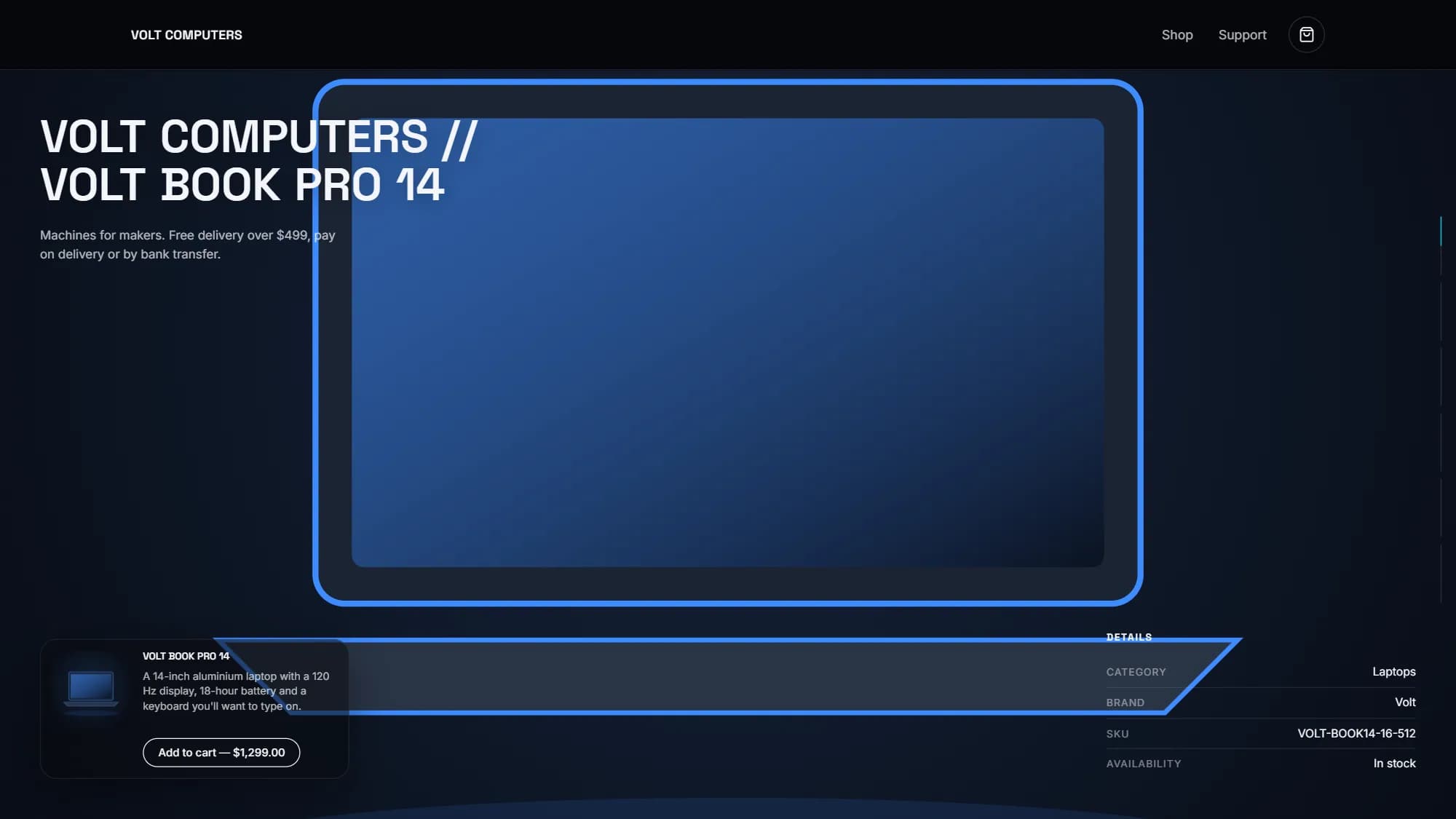
ComputorShop: hero spotlight with checkout
A dark, product-led template for electronics with a 3D spotlight, bestseller carousel, spec comparison and full cart and checkout.
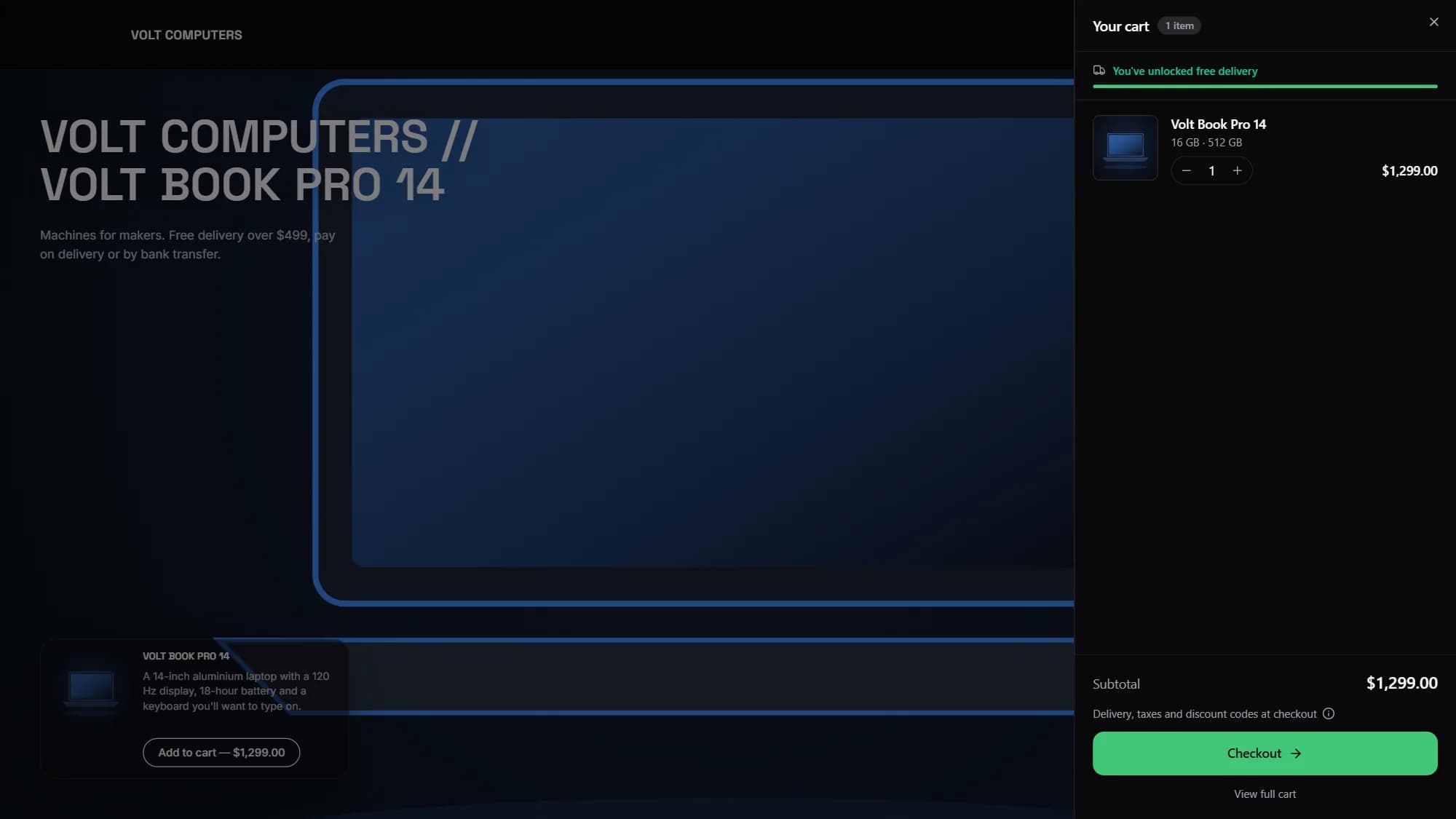
A cart drawer that opens itself
Compact line items with quantity controls, a free-delivery progress meter and one sticky checkout button. It fills the screen on phones.
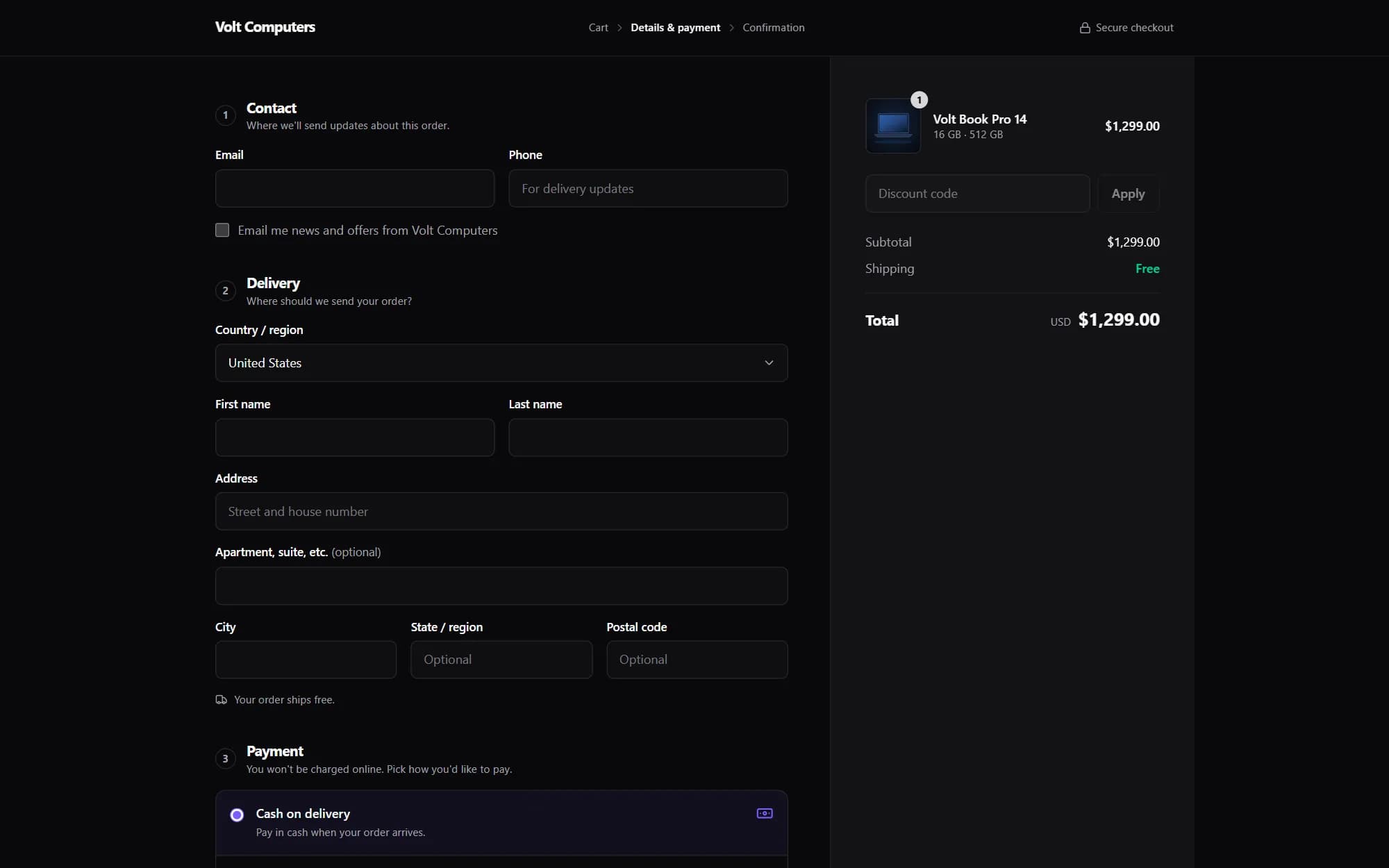
Checkout the server double-checks
Prices, stock and discount codes are re-validated when the order is placed. Customers then get a private page to track it.
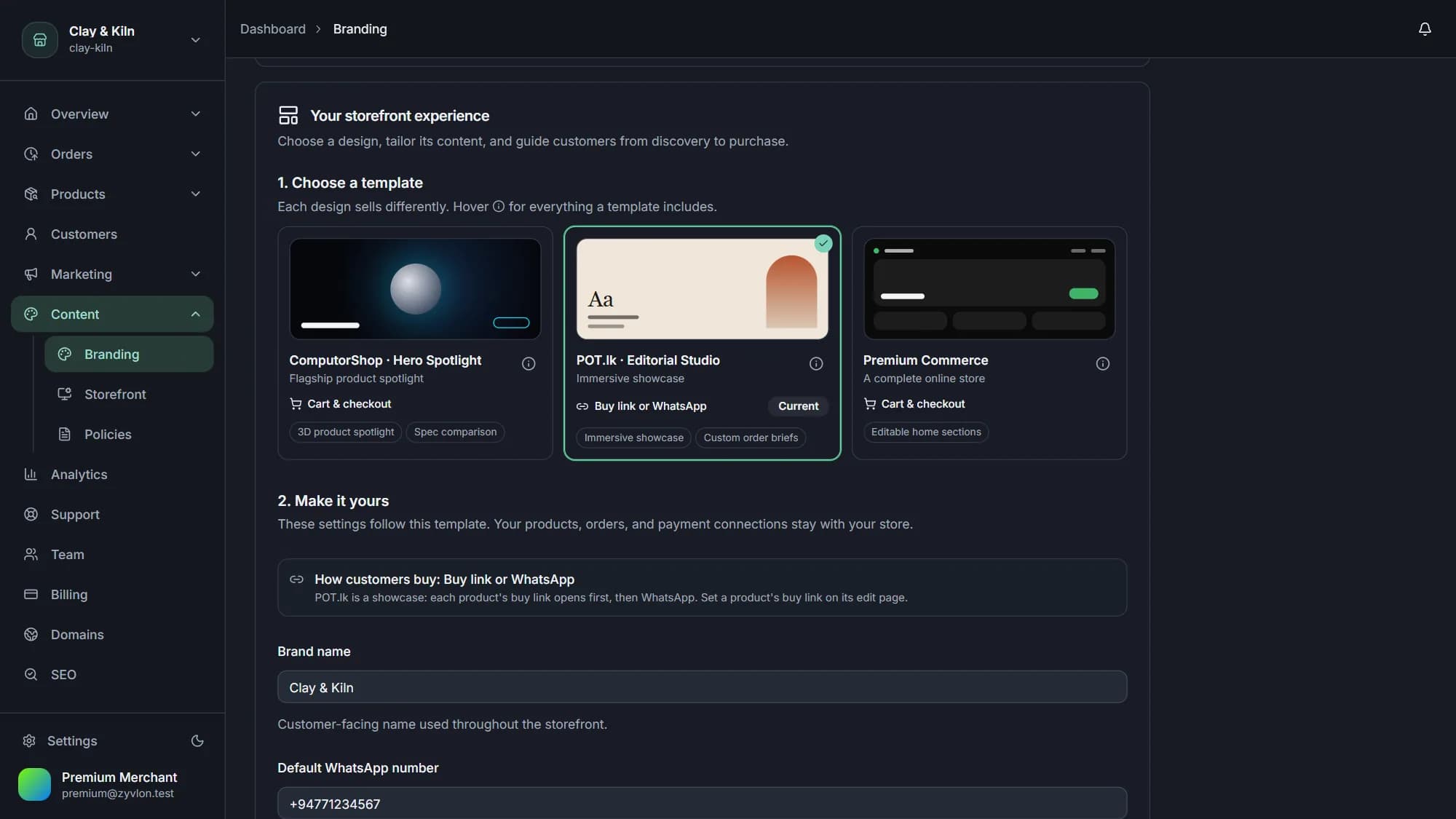
Template chooser with honest trade-offs
Merchants compare templates by how customers buy, and see what they would gain or lose (such as cart and checkout) before switching.
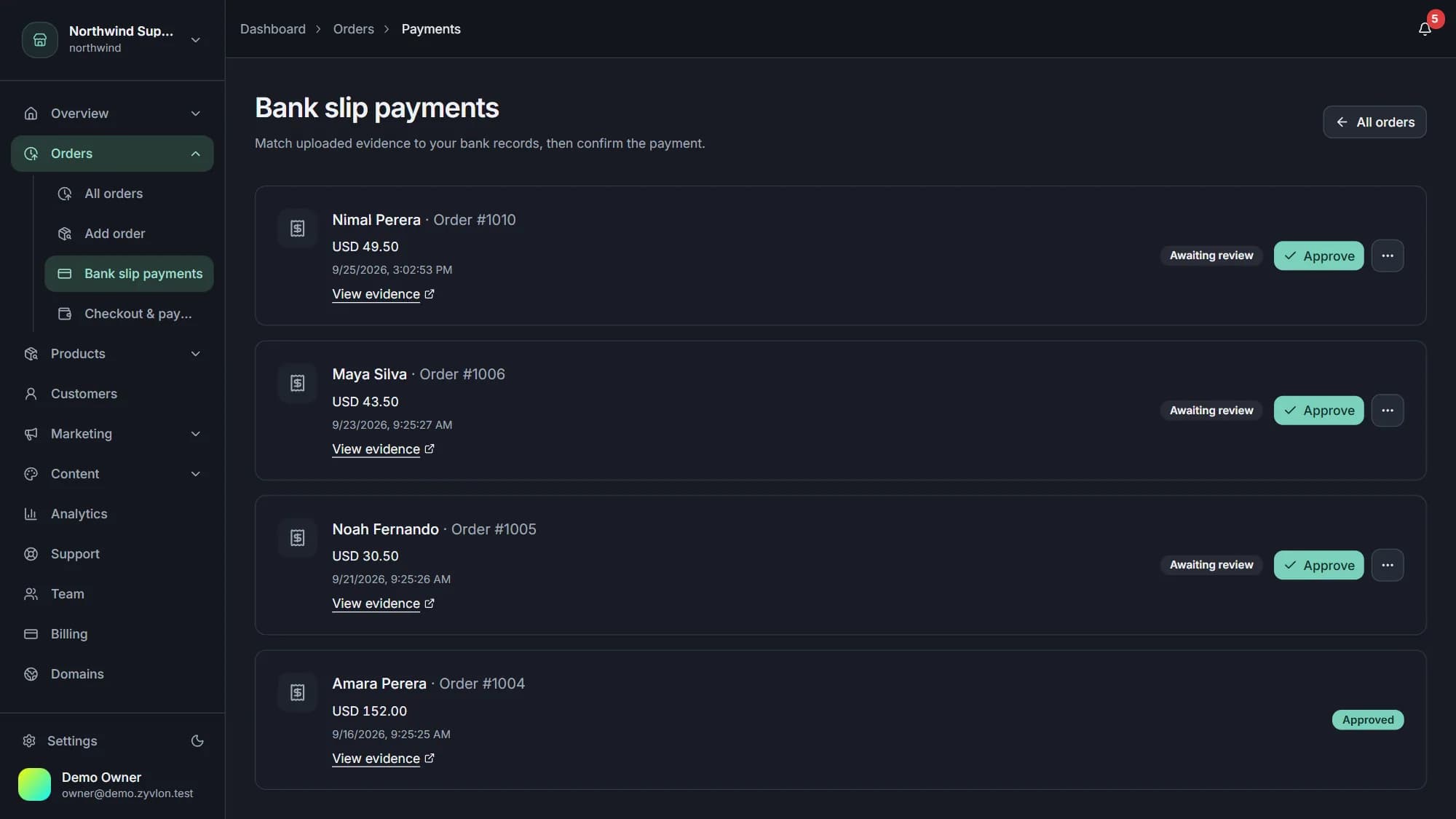
Bank-slip approvals
Transfer slips uploaded by customers arrive in one queue where staff view the evidence and approve the payment.
Related work
Education & Learning
OneAccess Academy
A connected education platform for OneAccess Network & Cyber Academy in Sri Lanka. The public training site, student learning portal and staff admin share one system for courses, batches, live sessions, exams, payments and certificates.
Corporate & B2B Services
GruntzCore
A corporate website for GruntzCore's operations, logistics and business process outsourcing services. Video-led branding, dedicated service pages, searchable insights and clear enquiry paths turn a broad capability set into an approachable business offer.
Services & Membership Platform
Bear2Arm
A website and customer operations platform for Bear2Arm, connecting its training, webinars, events, memberships and service bookings. The public experience is backed by customer accounts and an admin for reservations, content and payments.
Need a storefront platform, not just a store?
CrysoLabs can build multi-template commerce with local payment flows, merchant dashboards and plan-based growth around the way your business sells.