One storefront runtime for every merchant, and a control plane that keeps it honest.
Zyvlon can add merchants, templates and custom domains without new deployments: one runtime serves every store, design changes land as audited transactions, and the whole stack deploys, rolls back and scales from a single Dokploy Compose file.
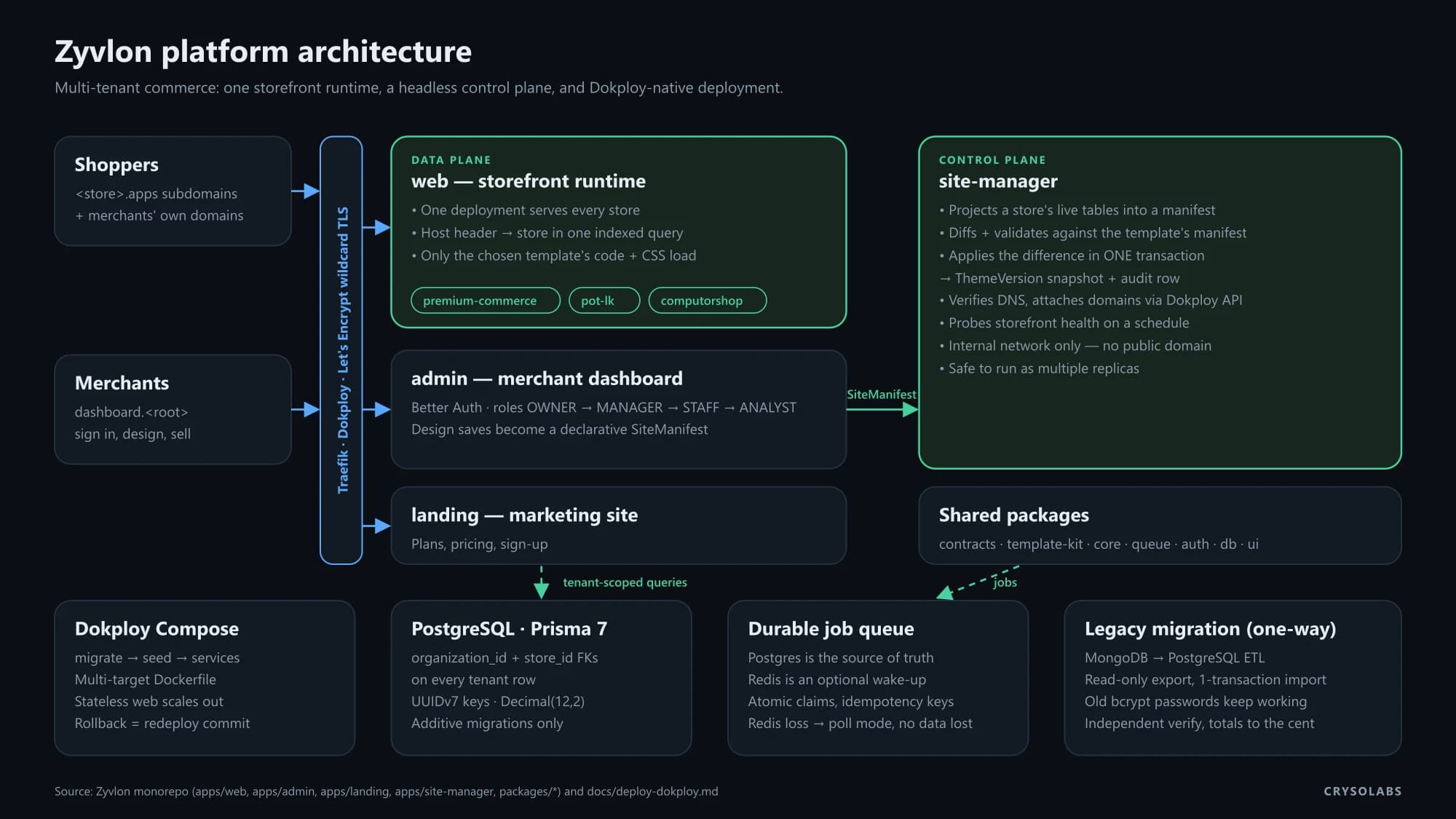
The multi-tenant platform and infrastructure under Zyvlon: a pnpm and Turborepo monorepo with a hostname-routed storefront runtime, a headless site manager that applies declarative manifests, a durable Postgres-backed job queue, Dokploy-native deployment, and a verified one-way migration from MongoDB to PostgreSQL.
Built by the CrysoLabs team
Category
Platform Infrastructure
Collaboration
CrysoLabs Team
Primary stack
Turborepo, Next.js 16, Fastify
The original Zyvlon ran on MongoDB inside one Next.js app. Growing into a SaaS needed tenant isolation, custom domains with automatic TLS, background work that survives restarts, and a way to move every existing merchant, order and password across without a single reset.
Best fit for SaaS founders and product teams outgrowing a single app: multi-tenant data, self-hosted deployment, domain automation, job queues and zero-loss data migrations.
What this proves
The concrete capabilities this build delivers, taken from the shipped product.
Key capabilities
Multi-tenant storefront runtime
A single stateless web service serves every store, resolves the store from the Host header, dynamically imports its template and maps theme tokens to CSS variables.
Headless control plane
The site manager projects a store's live tables into a manifest, diffs and validates changes against the template's own manifest, applies them atomically and probes storefront health.
Dokploy-native operations
One Compose deployment runs migrate, seed, web, admin, landing, site manager and Redis, with wildcard TLS for merchant subdomains and redeploy-to-rollback.
Zero-loss migration
A rehearsable ETL maps every legacy model to the new schema, keeps old ObjectIds as legacy ids and re-verifies counts, revenue and every order total to the cent.
Technology
Tools and architecture choices used to build and ship this project.
Architecture summary
Monorepo boundaries
Apps (web, admin, landing, site-manager), packages (db, contracts, template-kit, core, queue, auth, ui) and templates, each with a single job.
Data conventions
Prisma 7 on PostgreSQL, UUIDv7 keys, Decimal(12,2) money carried as strings, and organization and store foreign keys on every tenant row.
Built for replicas
Job claims are atomic and scheduled work is idempotency-keyed, so web and site-manager scale horizontally; losing Redis only adds latency.
Strategic thinking
Separate the data plane (serving stores) from the control plane (changing them).
Describe desired state as manifests; let one service reconcile it.
Make the database the source of truth for jobs, and cache the rest.
Rehearse migrations until the verifier passes, then run them once.
Overview
The multi-tenant platform and infrastructure under Zyvlon: a pnpm and Turborepo monorepo with a hostname-routed storefront runtime, a headless site manager that applies declarative manifests, a durable Postgres-backed job queue, Dokploy-native deployment, and a verified one-way migration from MongoDB to PostgreSQL.
Showcase gallery
Key screens and system views from the build, each tied to what it does for the business.
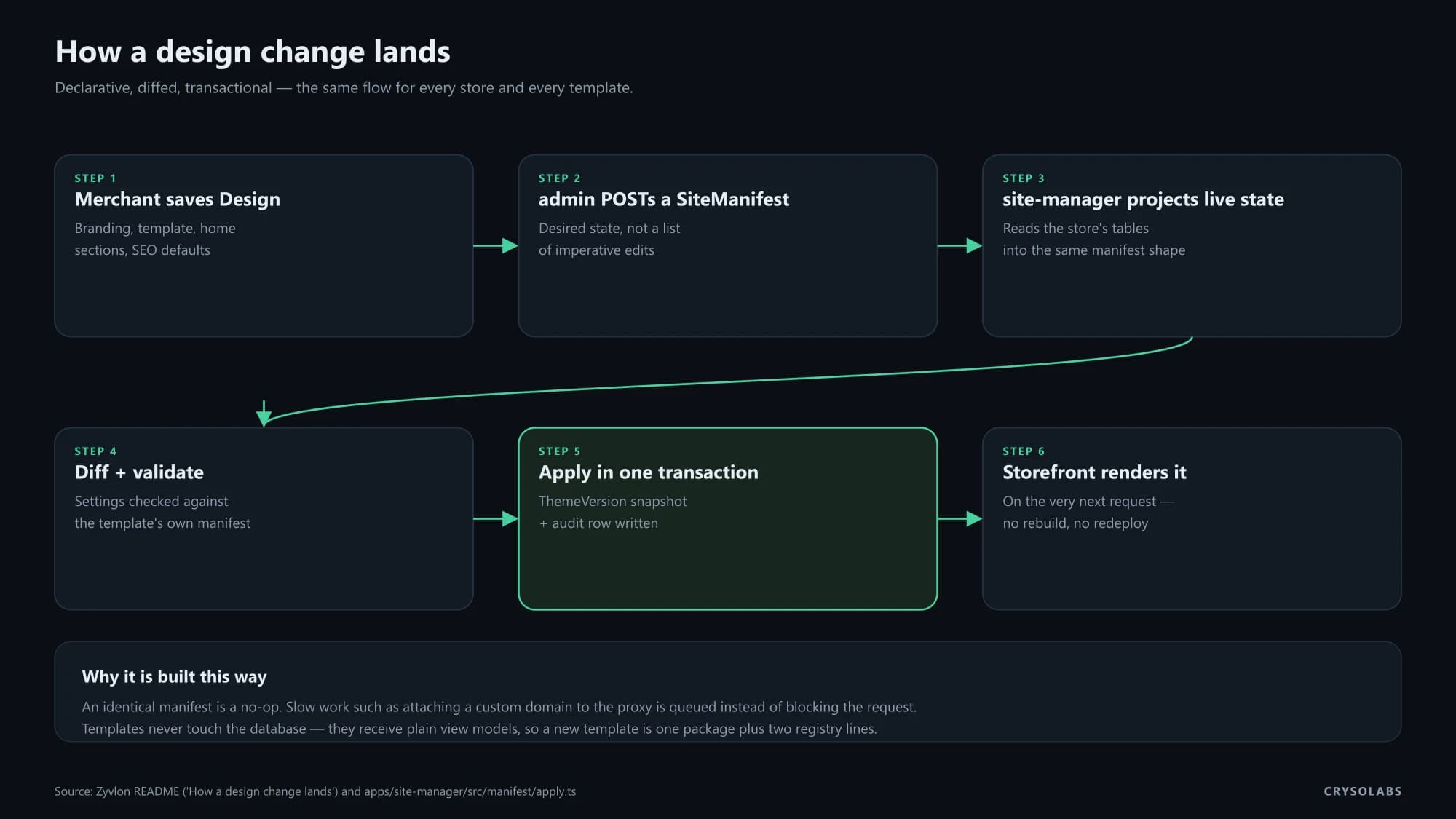
Manifest-driven changes
Design saves become declarative manifests; identical manifests are no-ops and slow work such as domain attachment is queued.
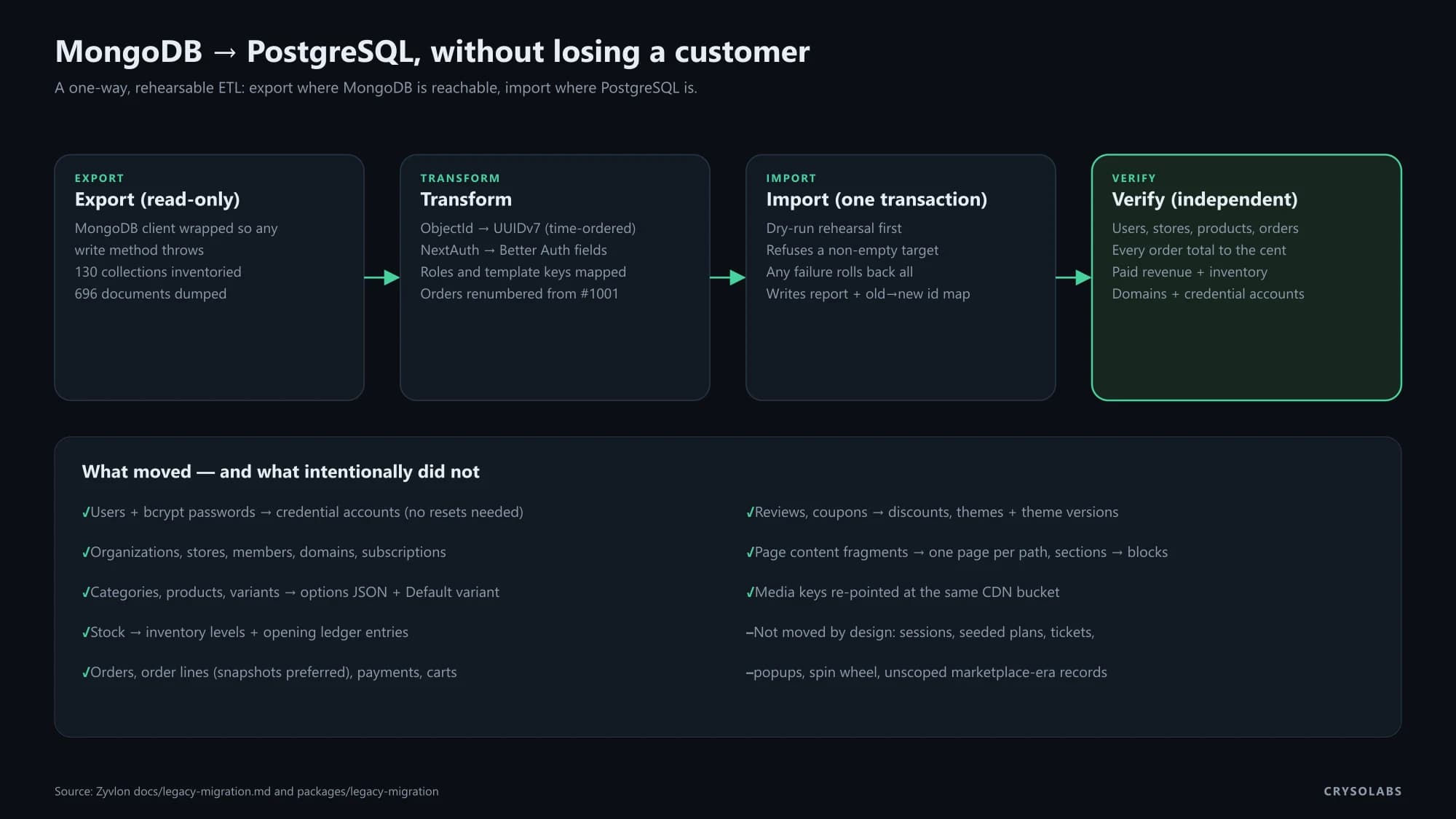
MongoDB → PostgreSQL
Export where MongoDB is reachable, import where PostgreSQL is, and verify independently before cutting over.
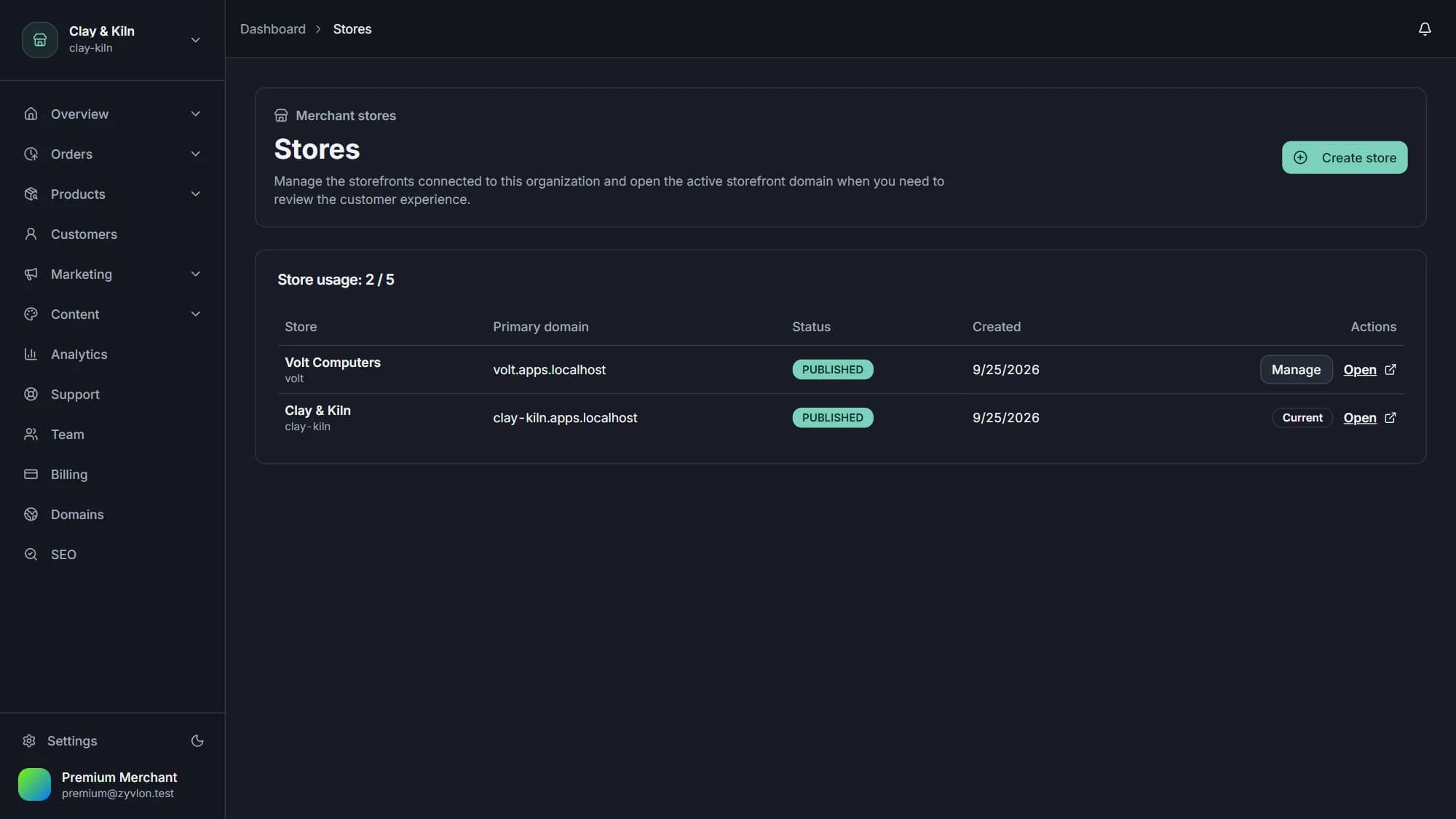
Many stores, one organization
Organizations own several stores within plan limits, each on its own subdomain or custom domain.
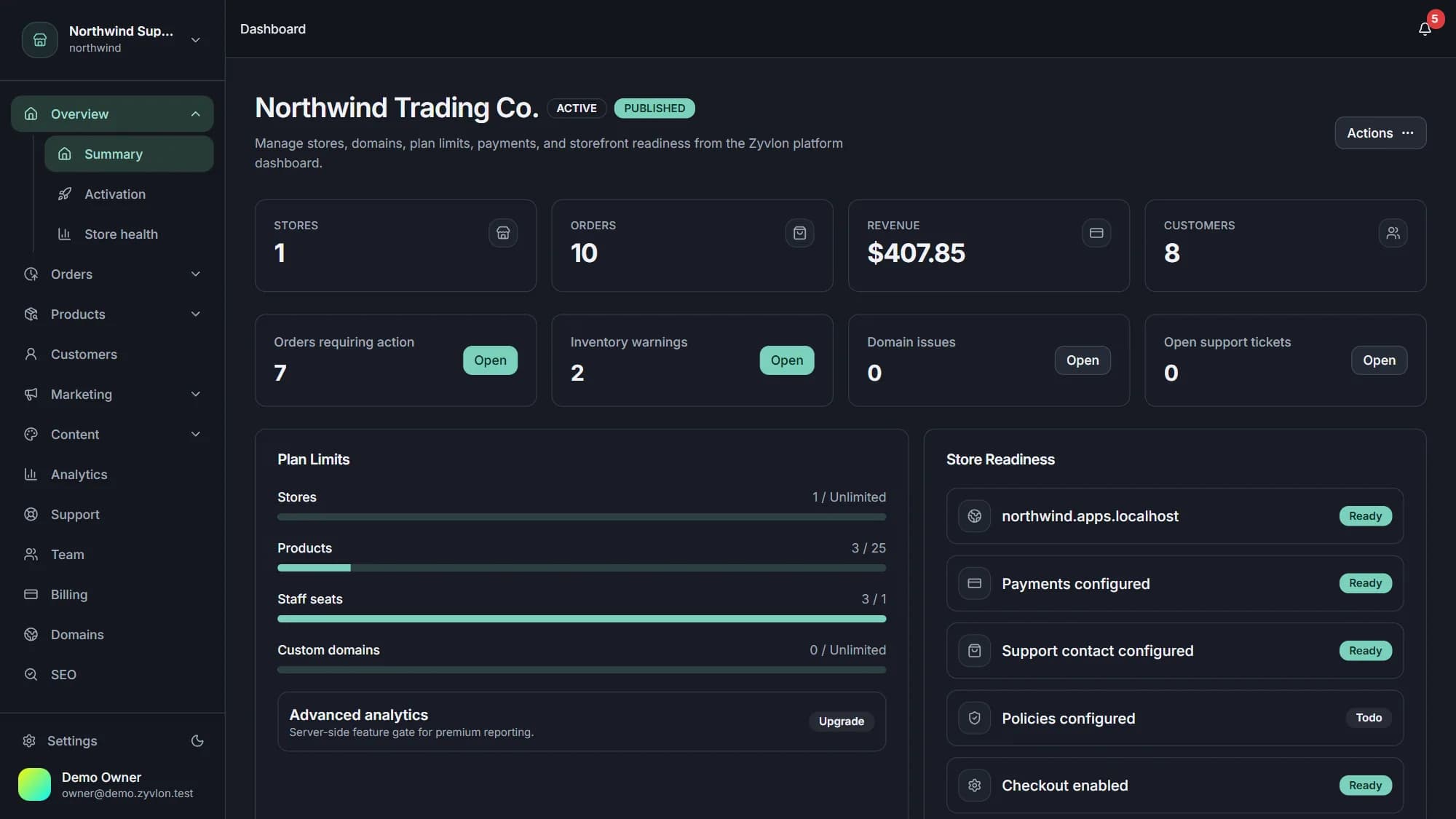
Readiness from real data
Domain, payments, support contact, policies and checkout checks are computed from live store data, not a static checklist.
Related work
Education Platform
The 1000X Project
The platform behind CrysoLabs' 1000X Project, a free three-day tech seminar programme for 1,000+ Sri Lankan schools delivered by four partners. One Next.js codebase runs the public programme site, school registration, a paid-course LMS with exams and verifiable certificates, and the operations admin.
Web Application
RestaurantPOS | Live Restaurant Management System
Preview the complete live-updating RestaurantPOS system built by CrysoLabs in partnership with Achira Gaming. Manage orders, kitchen printing, inventory, and sales reports in real time.
Web Application
MRCM | Vesak Festival Greeting Cards
Create beautiful Vesak greeting cards to share with your loved ones during this auspicious festival of lights.
Outgrowing a single app?
CrysoLabs designs multi-tenant platforms, self-hosted deployments, job queues and verified data migrations that let a product scale without a rewrite every year.